TEL +91 93927 21818 / +91 97003 50682 metron.hyd@gmail.com ISO/IEC 17025:2017 · ISO 9001:2015
METRONMETALLURGICAL SERVICES PVT. LTD.

SERVICES · 02

Civil NDT

Non-destructive condition assessment of RCC structures — buildings, bridges and industrial structures.

Civil NDT tells you the in-place quality and health of a concrete structure without demolishing or heavily coring it. We use it for quality checks on new construction, for structural audits and distress assessment of old buildings, before retrofitting or adding floors, and to settle disputes over concrete quality. Several methods are usually combined — for example rebound hammer with UPV, or half-cell with cover and carbonation — so the conclusions rest on more than one piece of evidence. The final report gives test locations, results, interpretation and recommendations for the structural engineer.

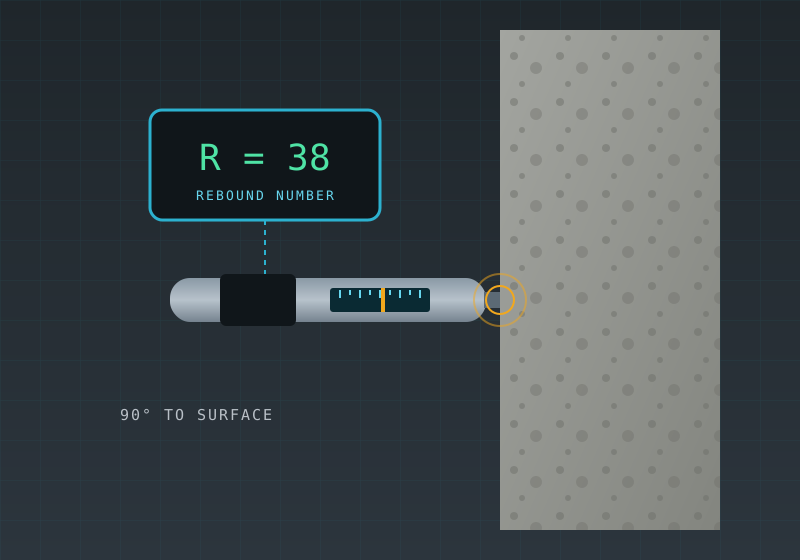
Rebound hammer held at 90 degrees to a concrete column

Rebound Hammer Test

A spring-loaded hammer strikes the concrete surface and the rebound number is recorded, averaging several impacts at each test point. The rebound number relates to surface hardness and, through the calibration curve, gives an estimate of in-situ compressive strength. It is quick and fully non-destructive, so large areas can be surveyed to compare members and find weak zones.
ASSESSESSurface hardness, estimated compressive strength and uniformity of concrete APPLIED TOColumns, beams, slabs, walls, foundations, bridge piers and industrial structures TYPICAL STANDARDSIS 516 (Part 5/Sec 4), IS 13311 (Part 2)
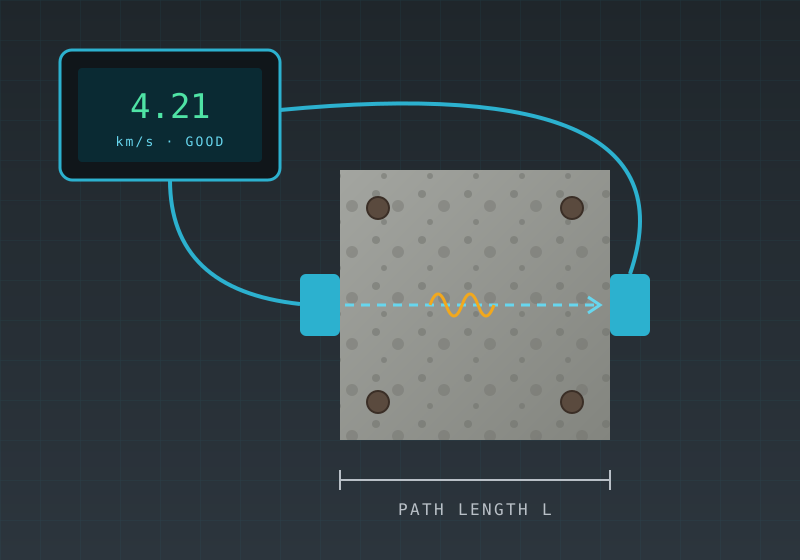
UPV transducers on opposite faces of a concrete column

Ultrasonic Pulse Velocity (UPV)

Transducers are placed on opposite faces of the member (direct), on adjacent faces (semi-direct) or on the same face (indirect), and the time for an ultrasonic pulse to cross the concrete is measured. Pulse velocity is graded as Excellent, Good, Medium or Doubtful to judge concrete quality. Low velocities point to cracks, voids, honeycombing or poor compaction inside the member.

ASSESSESHomogeneity, internal cracks, voids, honeycombing and overall quality grading APPLIED TOColumns, beams, piers, precast members, fire-damaged or distressed concrete TYPICAL STANDARDSIS 516 (Part 5/Sec 1), IS 13311 (Part 1)
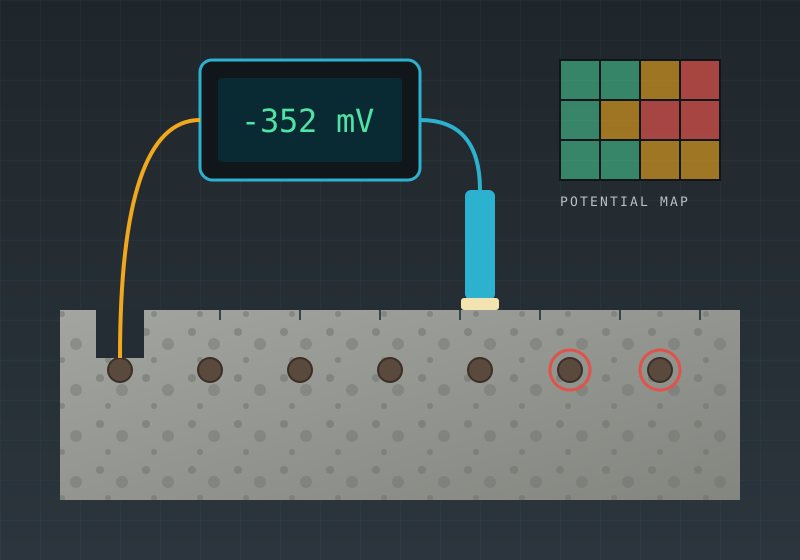
Half-cell electrode on a concrete slab connected to the rebar, with potential map

Half-Cell Potential Survey

A copper/copper-sulphate reference electrode is moved over the concrete surface on a grid while connected to the reinforcement. The measured potentials are plotted as a contour map that shows the likelihood of active corrosion in each zone, so repairs can be focused where they are needed before cracking and spalling appear.

ASSESSESProbability of reinforcement corrosion and extent of corrosion-risk zones APPLIED TOOld buildings, bridges, marine and water-retaining structures, industrial floors and chimneys TYPICAL STANDARDSASTM C876
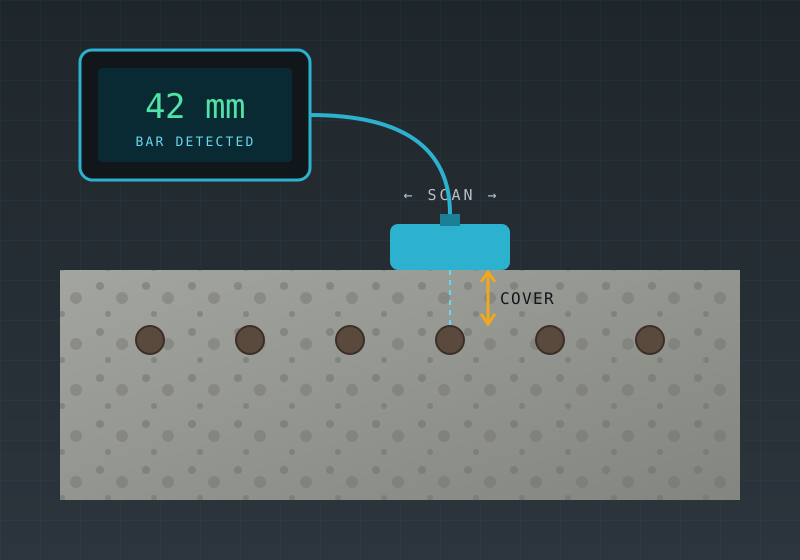
Cover meter scanning a slab and measuring concrete cover over rebar

Cover Depth Survey

An electromagnetic cover meter (rebar locator) scans the surface to find reinforcement bars, their spacing and direction, and measures the concrete cover over them. Results are compared with the structural drawings and the minimum cover required for durability and fire resistance. The survey also marks safe locations for coring or drilling.

ASSESSESConcrete cover, bar location, spacing and orientation; indicative bar size APPLIED TONew construction QA, structural audits, pre-coring scans, retrofitting and anchor/drilling works TYPICAL STANDARDSBS 1881-204, IS 456 (cover requirements)
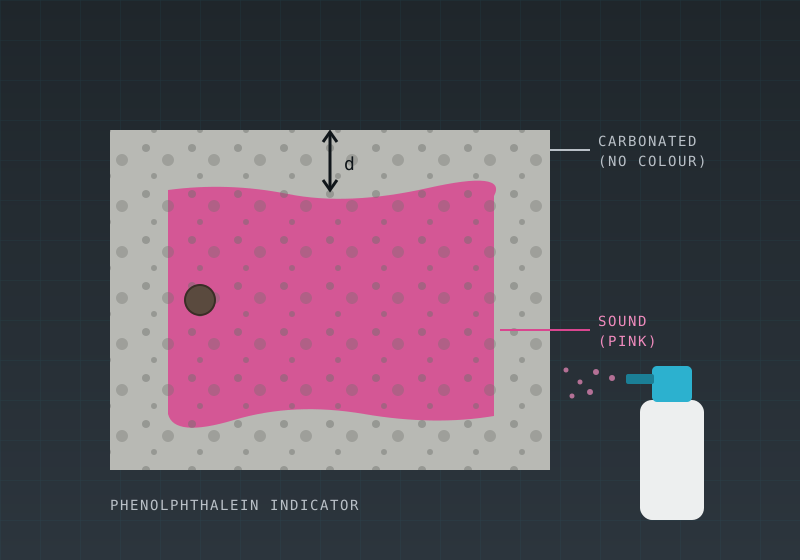
Phenolphthalein test showing the colourless carbonated zone and pink sound concrete

Carbonation Test

Phenolphthalein indicator is sprayed on a freshly broken, drilled or cored concrete surface. Sound, alkaline concrete turns pink; carbonated concrete stays colourless. Comparing the carbonation depth with the cover depth shows whether the reinforcement has lost its protective alkaline layer and is at risk of corrosion.

ASSESSESDepth of carbonation and loss of the protection that stops the reinforcement corroding APPLIED TOAgeing buildings, structural audits, durability assessment and repair planning TYPICAL STANDARDSBS EN 14630, RILEM CPC-18